
How Chronic Stress Quietly Destroys Your Physical Wellbeing
Most people think of stress as a mental problem — something that lives in your head, makes you anxious, and goes away once the deadline passes or the argument resolves. But chronic stress is a different beast entirely. Unlike the acute stress that spikes when you nearly miss a car accident and then fades, chronic stress settles into your body like an uninvited houseguest that never leaves. And over months and years, it quietly dismantles your physical health in ways that are only now being fully understood by science.
The statistics are sobering. According to the American Psychological Association, 77% of Americans regularly experience physical symptoms caused by stress. Yet many people never connect their persistent headaches, digestive issues, or recurring infections to the stress they’ve normalized as just part of modern life. That disconnect is exactly what makes chronic stress so dangerous — it operates in the background, doing damage long before symptoms become impossible to ignore.
What Actually Happens Inside Your Body When Stress Becomes Chronic
To understand why chronic stress is so destructive, it helps to understand what stress is actually designed to do. When you perceive a threat — physical or psychological — your hypothalamus triggers a cascade of hormonal signals that activate your adrenal glands. These glands then flood your body with stress hormones, primarily cortisol and adrenaline.
This is your fight-or-flight response, and it’s genuinely useful in short bursts. Your heart rate increases, blood pressure rises, blood sugar spikes to give you energy, and non-essential systems like digestion and immune function get temporarily suppressed so your body can focus on immediate survival. In a true emergency, this system saves lives.
The problem is that the human stress response wasn’t designed for the kind of ongoing, low-grade stressors that define modern life — financial pressure, difficult relationships, job insecurity, or constantly being connected to stressful news cycles. When these chronic stressors keep the fight-or-flight system switched on for months or years, the same biological machinery that’s meant to protect you starts destroying you from the inside out.
The Cardiovascular System: Your Heart Bears the Brunt
Chronic stress is particularly brutal on your heart and blood vessels. Sustained elevated cortisol levels cause persistent increases in heart rate and blood pressure, which over time cause tiny tears and inflammation in the walls of arteries. The body attempts to repair this damage, but the repair process contributes to the buildup of plaque — a condition known as atherosclerosis.
Research published in the European Heart Journal found that people with high levels of work-related stress had a 23% higher risk of heart attack compared to those with lower stress levels. The relationship between chronic stress and cardiovascular disease isn’t indirect or speculative — it’s mechanistic and well-documented.
Additionally, stress hormones increase levels of triglycerides and LDL cholesterol in the blood, further stacking the deck against cardiovascular health. People under chronic stress also tend to develop unhealthy coping behaviors like smoking, drinking alcohol, or eating poorly, all of which compound the direct physiological damage.
How Chronic Stress Wrecks Your Immune System
One of the most counterintuitive effects of chronic stress is what it does to immunity. Short-term stress can actually temporarily boost immune function — another evolutionary adaptation meant to prepare the body for injury or infection during a threat. But chronic stress does the opposite, significantly suppressing immune function over time.
Sustained high cortisol levels interfere with the production and function of white blood cells, particularly natural killer cells and T-cells, which are critical for identifying and destroying pathogens and abnormal cells. This leaves the body less capable of fighting off everything from the common cold to more serious infections.

A landmark study by Carnegie Mellon University found that people with higher stress levels were nearly three times more likely to develop a cold when exposed to a rhinovirus compared to low-stress individuals. This isn’t just about catching sniffles more often — chronic immune suppression has been linked to slower wound healing, increased susceptibility to autoimmune conditions, and even a higher risk of certain cancers.
The Inflammation Connection
Chronic stress also triggers systemic inflammation through a separate mechanism. When cortisol is persistently elevated, the body’s cells gradually become resistant to its anti-inflammatory signals — a phenomenon sometimes called glucocorticoid resistance. This paradoxically leads to increased inflammatory activity throughout the body, which is now recognized as a root driver of conditions including heart disease, type 2 diabetes, depression, and Alzheimer’s disease.
Your Digestive System Under Siege
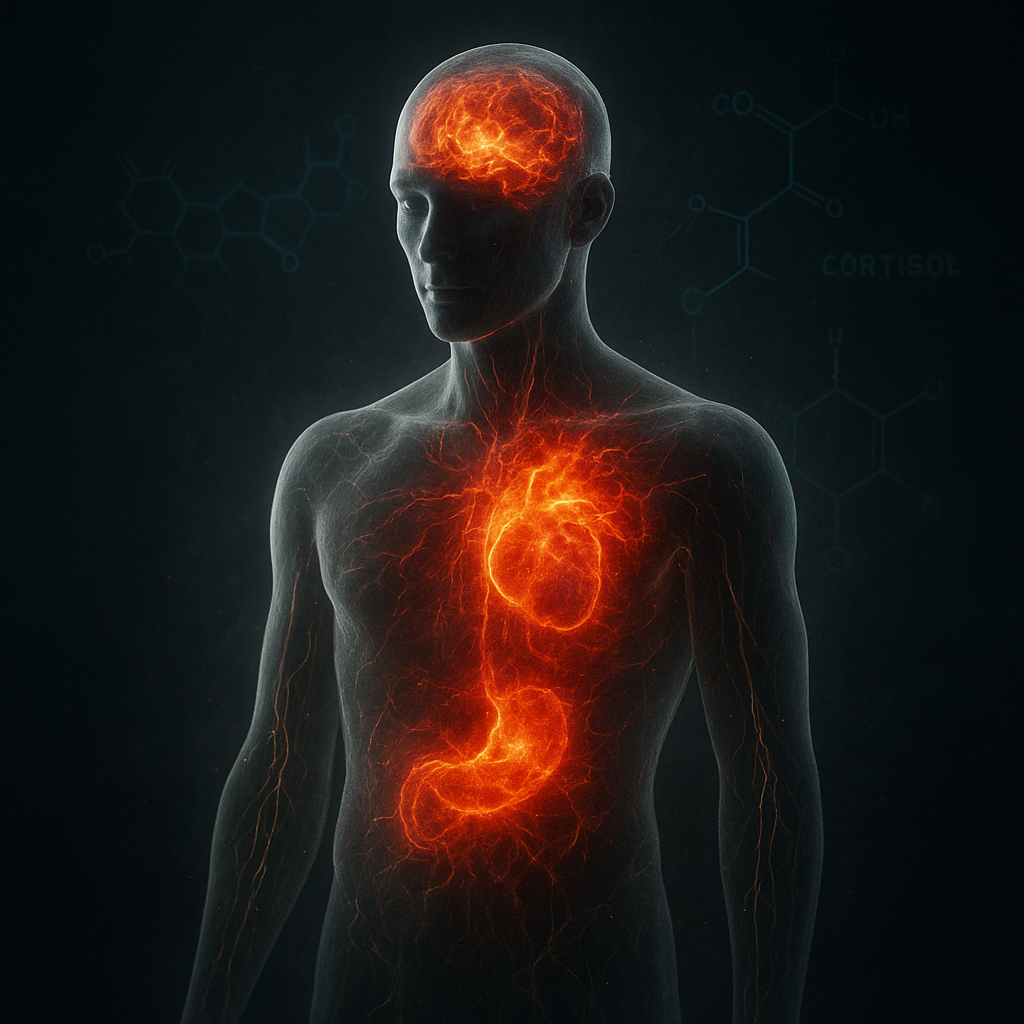
The gut-brain axis — the bidirectional communication network between your central nervous system and your gastrointestinal tract — means that your digestive system is exquisitely sensitive to psychological stress. When the fight-or-flight response activates, digestion slows or stops almost immediately, since the body considers it non-essential during a perceived threat.
In people under chronic stress, this disruption becomes ongoing. The practical effects can include:
- Irritable bowel syndrome (IBS) — stress is considered a major trigger for IBS flares
- Acid reflux and GERD — stress increases stomach acid production and slows gastric emptying
- Changes in gut microbiome — research shows chronic stress alters the composition of gut bacteria, with downstream effects on mood, immunity, and metabolism
- Increased intestinal permeability — sometimes called “leaky gut,” which allows bacterial toxins to enter the bloodstream and drive inflammation
- Nausea, cramping, and appetite changes — ranging from stress-induced overeating to complete loss of appetite
The gut contains approximately 500 million neurons and produces around 95% of the body’s serotonin, which is one reason why digestive distress and mood disorders so frequently co-occur in chronically stressed individuals.
What Chronic Stress Does to Your Brain and Sleep
While stress is often framed as a mental health issue, the physical changes it causes in brain structure and function are very real. Prolonged exposure to elevated cortisol has been shown to shrink the hippocampus — the brain region responsible for memory formation and emotional regulation. Studies using brain imaging have found measurable reductions in hippocampal volume in individuals with chronic stress and stress-related disorders.
Sleep is another major casualty. Cortisol naturally follows a diurnal pattern, peaking in the morning and dropping in the evening to allow sleep. Chronic stress disrupts this pattern, keeping cortisol elevated at night, making it difficult to fall asleep, stay asleep, or reach the deep restorative sleep stages. This creates a vicious cycle — poor sleep increases cortisol production the following day, which makes it even harder to sleep the next night.
The physical consequences of that sleep deprivation layer on top of the stress damage: impaired immune function, increased inflammatory markers, disrupted blood sugar regulation, elevated blood pressure, and accelerated aging at the cellular level through the shortening of telomeres.
Illnesses Caused by Stress and Anxiety: The Bigger Picture
When people ask what illnesses are caused by stress and anxiety, the honest answer is that the list is longer than most expect. Chronic stress has been implicated as a contributing factor in:
- Type 2 diabetes — cortisol raises blood sugar and impairs insulin sensitivity
- Obesity and metabolic syndrome — cortisol drives fat storage, particularly visceral fat around the abdomen
- Chronic pain conditions — including tension headaches, migraines, and fibromyalgia
- Skin conditions — psoriasis, eczema, and acne are all worsened by stress-driven inflammation
- Reproductive health issues — chronic stress disrupts hormone balance, affecting menstrual cycles, fertility, and libido
- Hair loss — a condition called telogen effluvium causes hair follicles to prematurely enter a resting phase
- Autoimmune flares — conditions like rheumatoid arthritis, lupus, and multiple sclerosis are often triggered or worsened by stress
Approaches to Managing Chronic Stress
Understanding that chronic stress has concrete physical consequences is actually empowering, because it means that addressing stress isn’t just about feeling better emotionally — it’s a genuine act of protecting your physical health. Several evidence-based interventions have been shown to reduce cortisol levels and reverse some of the physiological damage caused by chronic stress.
Movement and Exercise
Regular aerobic exercise is one of the most effective stress-reduction tools known. It lowers baseline cortisol levels, increases the production of endorphins and BDNF (a protein that supports brain health), and improves sleep quality. Even moderate-intensity exercise like brisk walking for 30 minutes most days of the week has measurable effects on stress biology.
Mindfulness and Breathing Practices
Controlled breathing exercises — particularly those that extend the exhale — activate the parasympathetic nervous system, effectively hitting the brakes on the fight-or-flight response. Mindfulness-based stress reduction (MBSR) programs have been shown in clinical trials to reduce cortisol levels, decrease inflammatory markers, and even slow cellular aging. Even 10 minutes of daily mindful breathing can produce measurable physiological benefits over time.
Sleep Prioritization
Given how profoundly sleep deprivation amplifies stress biology, treating sleep as a non-negotiable health behavior — rather than a luxury — is critical. Consistent sleep and wake times, a cool and dark sleep environment, and avoiding screens and stimulants before bed all support the natural cortisol rhythm that makes restful sleep possible.
Social Connection
Human connection is a powerful biological buffer against stress. Positive social interactions trigger the release of oxytocin, which actively suppresses cortisol and lowers blood pressure. Isolation, conversely, dramatically amplifies the physiological stress response. Maintaining close relationships isn’t just emotionally fulfilling — it’s physically protective.
Professional Support
For chronic stress that stems from deeper psychological sources — trauma, anxiety disorders, or burnout — working with a licensed mental health professional can address root causes in ways that self-help strategies alone cannot. Cognitive behavioral therapy (CBT) in particular has a strong evidence base for reducing both the psychological experience of stress and its measurable physical markers. If you’re working to make these changes stick over the long term, staying consistent with health goals is often one of the most challenging parts of the process.
In Summary
Chronic stress is not a character flaw or a sign of weakness — it’s a physiological state with documented, measurable consequences for nearly every system in the human body. The heart, immune system, gut, brain, skin, and hormonal system all bear the cumulative damage of prolonged stress hormone exposure. The insidious part is that the effects build slowly and silently, often masquerading as unrelated health complaints until the damage becomes severe.
The encouraging reality is that the body has a remarkable capacity to recover when the stress burden is reduced and healthier patterns are established. Recognizing chronic stress for what it actually is — a serious physical health issue, not just a mental one — is the necessary first step toward addressing it with the seriousness it deserves. Small, consistent changes to sleep, movement, social connection, and stress management practices can meaningfully alter the biology of stress and support long-term physical wellbeing.
Leave a Reply Cancel reply
Recent Blog
Latest
- How Chronic Stress Quietly Destroys Your Physical Wellbeing
- The Real Health Benefits of Intermittent Fasting You Should Know
- The Importance of Rest Days in Workout Programs: Maximizing Performance and Recovery
- Best Recovery Techniques for Athletes: Enhancing Performance and Reducing Injury Risk
- Common Sports Injuries and How to Prevent Them: Essential Tips for Athletes
Categories

Theme by The WP Club . Proudly powered by WordPress